
With the booming development of small-scale construction projects (such as rural residential construction, road maintenance, and small commercial renovations) around the world, the demand for mini concrete pump and portable concrete pump has been growing rapidly. As a cost-effective and flexible option in the concrete pump for sale market, mini portable concrete pumps are favored by small and medium-sized construction teams and individual builders. However, many purchasers often overlook the transportation cost when considering the cost of concrete pump, which in fact accounts for 10%-30% of the total procurement cost in many cases. The transportation cost of mini portable concrete pumps is not fixed; it is affected by a variety of factors, including equipment specifications, transportation distance, logistics mode, and regional policies. Understanding these influencing factors is crucial for construction enterprises and purchasers to control costs, formulate reasonable procurement plans, and avoid unexpected expenses. This article explores in detail the key factors that affect the transportation cost of mini size portable concrete pumps, integrates all specified key phrases, and provides practical reference for relevant practitioners.
Equipment Specifications of Mini Portable Concrete Pumps: The Fundamental Influencing Factor
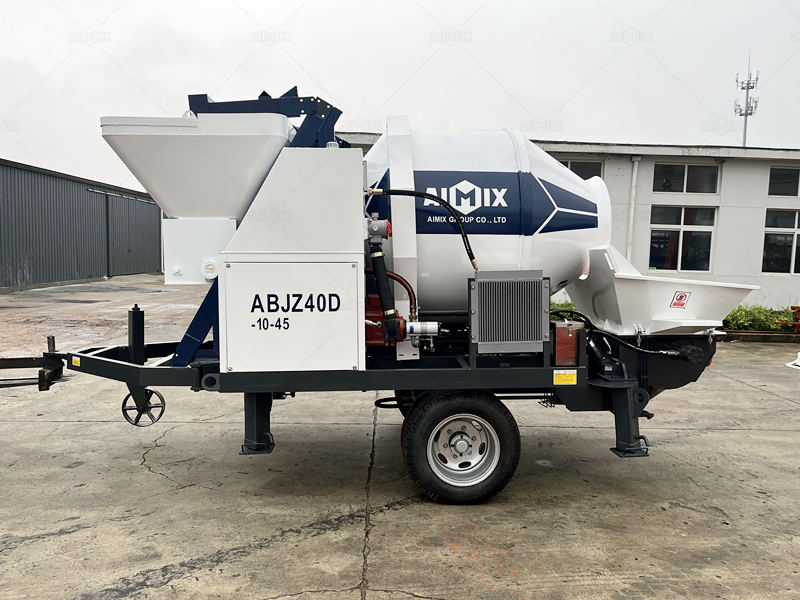
The specifications of mini portable concrete pumps, including weight, volume, and structural design, are the most fundamental factors affecting their transportation cost. As a type of concrete pump for sale, mini portable concrete pumps are designed to be compact and lightweight, but there are still differences in specifications: the weight usually ranges from 500kg to 3000kg, and the volume varies according to the model (generally 1.5m×1m×2m to 3m×1.5m×2.5m). These differences directly determine the transportation load, the type of transport vehicle required, and the loading and unloading difficulty—all of which affect the final transportation cost. For example, a lightweight mini concrete pump (weight 500-1000kg, such as a hand-push type portable concrete pump) can be transported by a small pickup truck or van, with a transportation cost of $0.5-$1 per kilometer; while a relatively heavy mini portable concrete pump (weight 2000-3000kg, such as a trailer-mounted mini portable model) requires a medium-sized flatbed truck, and the transportation cost will increase to $1-$2 per kilometer, doubling that of lightweight models. In addition, the structural design of the equipment also affects the cost: mini portable concrete pumps with detachable components (such as detachable hoppers and pumping pipelines) can be disassembled during transportation to reduce volume and weight, thereby reducing loading space and transportation costs; on the contrary, integrated mini portable concrete pumps with non-detachable structures occupy more loading space, requiring larger transport vehicles and increasing transportation costs. The mini concrete pump price itself is usually lower than that of large concrete pumps, but the transportation cost difference caused by specifications can account for 5%-15% of the mini concrete pump price, which is a factor that purchasers cannot ignore when calculating the total cost of concrete pump.
Transportation Distance and Route Conditions: Directly Determining the Basic Transportation Cost
Transportation distance and route conditions are the most direct factors affecting the transportation cost of mini portable concrete pumps. The longer the transportation distance, the higher the fuel consumption, driver labor costs, and vehicle depreciation costs, which directly push up the total transportation cost. For short-distance transportation (within 100 kilometers, such as transporting from a local concrete pump for sale warehouse to a nearby construction site), the transportation cost of a mini portable concrete pump is usually between $50-$200, depending on the equipment weight and vehicle type. For medium-distance transportation (100-500 kilometers), the cost increases to $200-$800, and for long-distance transportation (more than 500 kilometers, such as cross-border or inter-provincial transportation), the cost can reach $800-$3000, or even higher. In addition to distance, route conditions also have a significant impact on transportation costs: if the transportation route is smooth (such as highways and paved roads), the transport vehicle can maintain a stable speed, reducing fuel consumption and transportation time, thereby controlling costs; if the route is harsh (such as rural unpaved roads, mountainous roads, or roads with frequent traffic jams), the vehicle speed will be reduced, fuel consumption will increase, and there may be additional costs such as vehicle wear and tear and delay fees. For example, transporting a mini portable concrete pump to a remote rural construction site with unpaved roads will increase the transportation cost by 20%-40% compared to transporting it to an urban construction site with smooth roads. This is especially obvious in regions with underdeveloped transportation infrastructure, where the transportation cost of mini portable concrete pumps may even exceed 30% of the total cost of concrete pump.
Logistics Mode Selection: Balancing Cost and Efficiency
The choice of logistics mode for transporting mini portable concrete pumps is another key factor affecting transportation costs, and different logistics modes have significant differences in cost, efficiency, and applicability. The common logistics modes for mini portable concrete pumps (as a type of concrete pump for sale) include road transportation, railway transportation, sea transportation, and air transportation, and the selection of logistics mode is usually determined by transportation distance, urgency, and regional conditions. Road transportation is the most commonly used mode for short and medium-distance transportation, with the advantages of flexibility, convenience, and door-to-door service. The cost of road transportation is relatively transparent, usually calculated by distance and weight, and is suitable for most mini portable concrete pump transportation needs. Railway transportation is suitable for long-distance and large-batch transportation (such as transporting multiple mini portable concrete pumps at one time), with the advantages of low fuel consumption, low vehicle wear, and high safety. The transportation cost of railway transportation is 10%-20% lower than that of long-distance road transportation, but it has limitations: it requires the construction site to be near a railway station, and additional short-distance transportation costs are needed to transport the equipment from the railway station to the construction site. Sea transportation is mainly used for cross-border transportation (such as exporting mini portable concrete pumps from China to other countries), with the advantage of low cost for large-batch transportation, but the transportation time is long (usually 10-30 days), and there are additional costs such as port handling fees, customs fees, and inland transportation fees from the port to the construction site. Air transportation is suitable for urgent orders (such as emergency construction projects that need to use mini portable concrete pumps immediately), but the cost is extremely high—usually 5-10 times that of road transportation, so it is only used in special cases. When purchasers choose the logistics mode, they need to balance cost and efficiency according to their own needs, and the choice of logistics mode directly affects the final transportation cost and the mini concrete pump price’s overall cost performance.
Loading, Unloading, and Packaging Requirements: Additional Cost Drivers
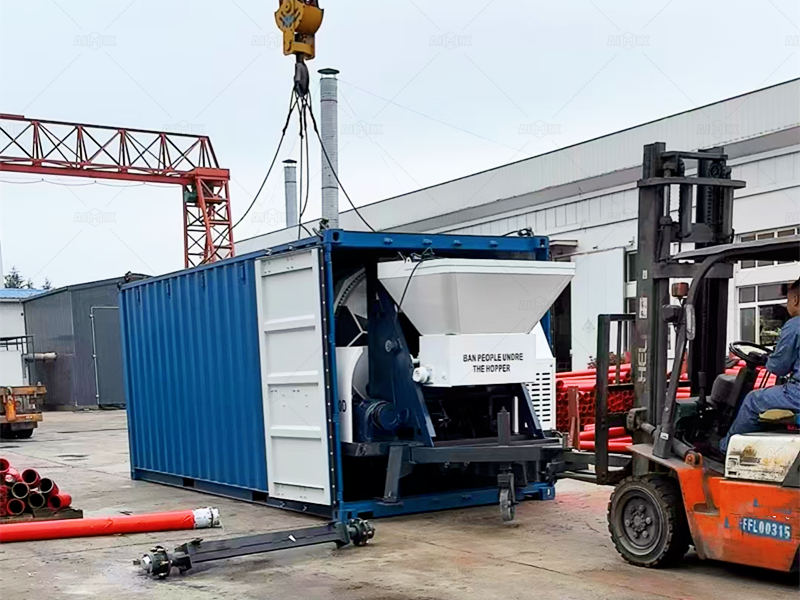
Loading, unloading, and packaging of mini portable concrete pumps also generate additional costs, which are often overlooked but directly affect the total transportation cost. As a precision mechanical equipment, the portable concrete pump and mini concrete pump need to be properly packaged and handled during transportation to avoid damage to core components (such as hydraulic systems, electrical control modules, and pumping mechanisms). The packaging cost of mini portable concrete pumps usually ranges from $50-$200, depending on the packaging material (such as foam, wooden boxes, and protective film) and packaging complexity. For example, mini portable concrete pumps transported to remote areas or cross-border need to use high-strength wooden box packaging to prevent damage during loading, unloading, and transportation, and the packaging cost will be relatively higher. Loading and unloading costs are another additional expense, which is determined by the equipment weight, loading and unloading difficulty, and the type of loading and unloading equipment required. A lightweight mini portable concrete pump (less than 1000kg) can be loaded and unloaded manually or with a small forklift, with a loading and unloading cost of $20-$50; a heavier model (more than 2000kg) requires a crane or large forklift for loading and unloading, and the cost will increase to $50-$150. In addition, if the loading and unloading site is narrow or has no suitable loading and unloading equipment, additional costs may be incurred to rent loading and unloading equipment or adjust the loading and unloading plan. These packaging and loading/unloading costs usually account for 5%-10% of the total transportation cost, and in some cases, even higher, which needs to be included in the total cost of concrete pump calculation.
Regional Policies and Regulatory Costs: Indirect Influencing Factors
Regional policies and regulations, including transportation restrictions, tolls, and customs policies (for cross-border transportation), are indirect but important factors affecting the transportation cost of mini portable concrete pumps. Different regions have different transportation policies for large and medium-sized vehicles, and although mini portable concrete pumps are small in size, their transport vehicles may still be subject to restrictions such as restricted driving time, restricted routes, and over-limit inspections. For example, some urban areas have restricted driving time for medium-sized and large-sized transport vehicles (such as 7:00-9:00 and 17:00-19:00 rush hours), which may lead to transportation delays and increase labor costs for drivers. Tolls are another important cost: highways, bridges, and tunnels in many regions charge tolls according to the vehicle type and weight, and the total tolls for long-distance transportation can reach several hundred to several thousand dollars, which directly increases the transportation cost. For cross-border transportation of mini portable concrete pumps (as a type of concrete pump for sale), customs policies and tariffs have a significant impact on transportation costs: import and export tariffs, customs inspection fees, and document handling fees can account for 15%-30% of the total transportation cost. In addition, some regions have strict environmental protection policies, requiring transport vehicles to meet certain emission standards, and if the transport vehicle does not meet the standards, it may need to be replaced or modified, increasing additional costs. These policy-related costs are often unpredictable, but they have a significant impact on the total transportation cost, and purchasers and logistics companies need to understand the relevant policies in advance to avoid unexpected expenses.
Market Supply and Demand of Logistics Services: Fluctuating Cost Factors
The market supply and demand of logistics services also affects the transportation cost of mini portable concrete pumps, with costs fluctuating with changes in market conditions. In the peak season of construction (such as spring and autumn), the demand for concrete pump for sale (including mini portable concrete pumps and portable concrete pump) increases, and the demand for logistics services also surges. At this time, logistics companies may raise transportation prices due to insufficient vehicles and drivers, and the transportation cost of mini portable concrete pumps may increase by 10%-20% compared to the off-season. Conversely, in the off-season of construction (such as winter in cold regions), the demand for logistics services decreases, and logistics companies may offer preferential prices to attract customers, reducing transportation costs. In addition, the price of fuel (such as diesel and gasoline) is closely related to the transportation cost—fuel prices account for 30%-40% of the total transportation cost, and fluctuations in fuel prices will directly affect the transportation cost. For example, a 10% increase in diesel prices will lead to a 3%-4% increase in the transportation cost of mini portable concrete pumps. The market competition of logistics companies also affects the cost: in regions with more logistics companies, the competition is fierce, and the transportation price is relatively lower; in regions with fewer logistics companies, the price is relatively higher. These market factors lead to fluctuations in the transportation cost of mini portable concrete pumps, which need to be considered when formulating procurement and transportation plans.
Insurance and Risk Control Costs: Cost of Avoiding Losses
Insurance and risk control costs are often ignored by purchasers, but they are important parts of the total transportation cost, especially for long-distance and cross-border transportation of mini portable concrete pumps. Mini portable concrete pumps are precision mechanical equipment, and there is a risk of damage, loss, or delay during transportation. To avoid these risks, logistics companies and purchasers usually purchase transportation insurance, and the insurance cost is usually 1%-3% of the equipment value (i.e., the mini concrete pump price). For example, if the mini concrete pump price is $10,000, the transportation insurance cost is $100-$300. Although this increases the transportation cost, it can transfer the risk of equipment damage or loss during transportation, avoiding greater economic losses. In addition, to ensure the safe transportation of mini portable concrete pumps, logistics companies may take additional risk control measures, such as arranging professional drivers with rich experience, strengthening the fixing of equipment during transportation, and conducting real-time tracking of the transport vehicle. These risk control measures may increase certain labor and material costs, but they can reduce the probability of transportation accidents and avoid additional costs caused by damage or delay of equipment. These insurance and risk control costs are necessary investments to ensure the safe and smooth transportation of mini portable concrete pumps, and should be included in the total cost of concrete pump calculation.
In conclusion, the transportation cost of mini portable concrete pumps is affected by a variety of factors, including equipment specifications, transportation distance and route conditions, logistics mode selection, loading and unloading and packaging requirements, regional policies, market supply and demand of logistics services, and insurance and risk control costs. These factors interact with each other, determining the final transportation cost, which is an important part of the total cost of concrete pump. For purchasers and construction enterprises, understanding these influencing factors can help them choose the appropriate concrete pump for sale (including mini portable concrete pumps and portable concrete pump), select the optimal logistics mode, and control transportation costs effectively. For logistics companies, grasping these factors can help them formulate reasonable pricing strategies and improve service quality. As the demand for mini portable concrete pumps continues to grow, mastering the factors affecting their transportation costs will become more and more important for all relevant parties.