
In the demanding world of aggregate production and mining, successfully processing hard rock—such as granite, basalt, or hard quartzite—is a significant technical and economic challenge. These materials are characterized by high compressive strength, significant abrasiveness, and a propensity to produce flaky, elongated particles if crushed improperly. For quarry owners and plant managers, the pivotal question that directly impacts operational efficiency and product value is: which crusher is suitable for your hard rock? The answer is not universal but is instead derived from a systematic evaluation of the rock’s properties, the desired end product specifications, and the specific stage within the crushing circuit. The three primary contenders for hard rock duty are the robust jaw crusher, the precise rock cone crusher, and the high-impact crusher, each with distinct operational principles, strengths, and ideal applications. Making an informed choice involves moving beyond general comparisons to a deep understanding of how these machines interact with the specific challenges posed by hard, abrasive feed material. This guide will analyze the performance of jaw crusher and cone crusher systems, the role of impact crushers, and even the niche for a small cone crusher, providing a clear decision-making framework to ensure your investment delivers maximum productivity and the highest-quality product from your valuable hard rock resource.
Foundational Considerations: Analyzing Your Hard Rock
Before any equipment comparison can begin, you must establish a clear profile of the material you intend to process. This foundational analysis is the critical first step in determining which crusher is suitable for your hard rock. The key characteristics to assess are hardness, often referenced on the Mohs scale or by its compressive strength in megapascals (MPa); abrasiveness, which dictates wear rates on crusher components; and the natural fracture tendency of the rock. A very hard and abrasive rock like taconite or greywacke will rapidly wear out crusher components not designed for such duty. Equally important are your production goals: the required hourly or daily tonnage (capacity) and the exact product specifications. Are you producing large, coarse aggregates for base layers, well-graded, cubical stones for concrete and asphalt, or finely crushed material for manufactured sand? The target product size and shape will heavily influence the crusher type and the configuration of the overall crushing circuit. This upfront analysis provides the non-negotiable criteria that will guide every subsequent equipment selection decision.
Primary Crushing with Jaw Crushers
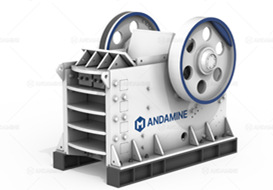
The primary crushing stage is responsible for the first major size reduction, taking blasted rock with dimensions often exceeding one meter down to a manageable 150-250mm. For this demanding task with hard rock, the jaw crusher is the undisputed and most common workhorse. When evaluating which crusher is suitable for your hard rock at this initial stage, the jaw crusher’s advantages are clear. It operates on a principle of compressive force: a fixed jaw plate acts as a stationary anvil while a moving jaw plate cycles, squeezing the rock until it fractures. This simple, robust mechanism is exceptionally reliable and capable of handling the extreme forces required to break the toughest materials. Jaw crushers are relatively insensitive to variations in feed size and can tolerate a moderate amount of moisture or clay without severe clogging. Their design prioritizes high capacity and reduction ratio over particle shape, which is acceptable for the primary stage where the goal is volume reduction. For contractors or smaller operations, a mobile jaw crusher provides excellent flexibility. When used in a stationary plant, a well-sized jaw crusher sets the foundation for the entire circuit’s throughput, making its selection based on feed size and capacity requirements a paramount decision.
Secondary and Tertiary Reduction with Cone Crushers
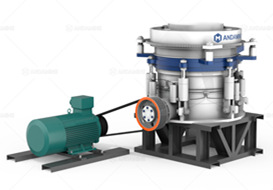
Once the hard rock has been reduced by the primary jaw, the focus shifts to producing well-shaped, specification-grade aggregates. This is the core domain of the rock cone crusher. In the context of which crusher is suitable for your hard rock after primary breaking, the cone crusher is frequently the optimal and sometimes the only viable choice for secondary and tertiary crushing. Its operating principle involves compressing rock between a gyrating mantle and a stationary concave bowl. This creates a multi-layered, inter-particle compression action that is uniquely effective on hard, abrasive materials. It produces a more cubical product—essential for high-strength concrete and stable asphalt mixes—while managing wear in a way that impact crushers often cannot. Modern cone crushers offer advanced features like hydraulic adjustment of the closed-side setting (for quick product size changes) and automatic overload protection (to pass tramp metal). For lower-volume operations or specific circuit needs, a small cone crusher can serve as an efficient tertiary unit or be part of a compact mobile plant. The choice between a standard cone for secondary duty and a short-head cone for finer tertiary crushing depends on the target product size. The synergy between a jaw crusher and cone crusher forms the backbone of most successful hard rock processing plants, as the jaw reliably creates the feed for the cone to refine.
Evaluating Impact Crushers for Specific Hard Rock Applications
Impact crushers, including Horizontal Shaft Impactors (HSI) and Vertical Shaft Impactors (VSI), offer a different approach using high-speed impact rather than compression. Their role in hard rock processing is more specialized. When asking which crusher is suitable for your hard rock if perfect particle shape is the absolute priority, an HSI crusher may be considered for secondary crushing of less abrasive hard rocks. HSIs excel at creating highly cubical products. However, for highly abrasive hard rock like granite or basalt, the wear costs on blow bars and aprons can be prohibitively high compared to the wear on cone crusher mantles and concaves, making them less economical for continuous high-tonnage duty. The VSI crusher finds its niche in the final stage as a tertiary or quaternary machine dedicated to shaping and sand production. By using a “rock-on-rock” or “rock-on-anvil” crushing action, a VSI can take already-crushed hard rock from a cone crusher and produce premium, fracture-free manufactured sand. While offering the best product shape, VSIs are sensitive to feed gradation and moisture and have specific maintenance requirements. Therefore, for general aggregate production from hard rock, a cone crusher will typically offer a lower cost per ton, with impact crushers reserved for specific product-shaping roles where their higher operational cost can be justified by a higher product selling price.
Strategic Selection and Circuit Design
Ultimately, determining which crusher is suitable for your hard rock is about designing an efficient circuit, not choosing a single machine. A classic and highly effective flow for hard, abrasive rock is a primary jaw crusher followed by a secondary cone crusher in closed circuit with a screen. Oversize material from the screen is recirculated back to the cone crusher. For further refinement, a tertiary cone crusher (or a small cone crusher in a separate circuit) and possibly a VSI for sand making may be added. The selection process must balance capital expenditure (CAPEX) with operating costs (OPEX), especially wear parts. While a jaw crusher has lower wear costs than a cone crusher on a per-ton basis for primary duty, the cone crusher’s ability to create a valuable, cubical product justifies its cost in later stages. The final decision should be guided by a total cost of ownership analysis that matches the chosen jaw crusher and cone crusher models to your specific rock properties, desired product slate, and production volume, ensuring a reliable and profitable operation tailored to the unique challenges of hard rock.